

Referlink
Use the AI Agent to drive job seeker volume, then activate platform when users need referrals. Agent creates engagement, platform becomes premium feature.
Designing an AI system that solves the referral access problem at scale
Referlink is a two-phase system I'm building to solve the job search problem. After researching why job searching feels so broken, I identified "hard to find referral opportunities" as the immediate pain, but saw a bigger opportunity in full automation.
The strategy:
Phase 1 - build a referral marketplace with integrated dashboard.
Phase 2 - layer on an AI agent that autonomously scrapes jobs, matches semantically, tailors resumes, and runs your search 24/7 (in development).
The Research
While job searching, I talked to other people going through the same process to understand if my frustrations were universal or just mine.
What I found: The phrase "hard to find referral opportunities" came up repeatedly. People knew referrals were important, 70% of jobs are filled that way but their networks didn't overlap with the companies they wanted to work for.
The deeper pattern: Job searching takes an enormous amount of time. Most of it is repetitive work: checking job boards, tailoring resumes, searching for connections, tracking applications.
The strategic insight: You need to solve both problems, but in sequence:
Phase 1: Build the marketplace (referral access + tracking in one product)
Phase 2: Add the intelligence layer (autonomous AI agent that automates execution)
Why this order matters: You can't automate referral discovery without first having a referral network to tap into. Phase 1 creates the infrastructure. Phase 2 adds the intelligence
Phase 1: Referlink Marketplace + Dashboard
Phase 1 combines two essential needs into one product: connecting people for referrals and giving them a place to track everything.
The core insight: this isn't really a networking problem. It's a matching problem plus an organization problem.
What I Built
The referral marketplace:
Employees would love to help people finding new jobs, and might also be able to gain the referral bonuses. Job seekers need introductions. Both sides want the same outcome. We just need to match them efficiently without requiring months of relationship-building first.

Phase 2: The AI Agent (In Development)
Phase 1 solves referral access and tracking. But job searching still requires hours of daily manual work: searching across 50+ sources, reading descriptions, tailoring resumes, finding connections.
What the Agent Will Do
Autonomous job discovery:
Continuously scrape LinkedIn, Greenhouse, Lever, company career pages
Monitor your target companies 24/7 for new postings
Detect opportunities within hours of publication
Alert you only to high-priority matches
Instead of manually checking 50+ job boards daily, the agent checks for you continuously and surfaces only what matters.
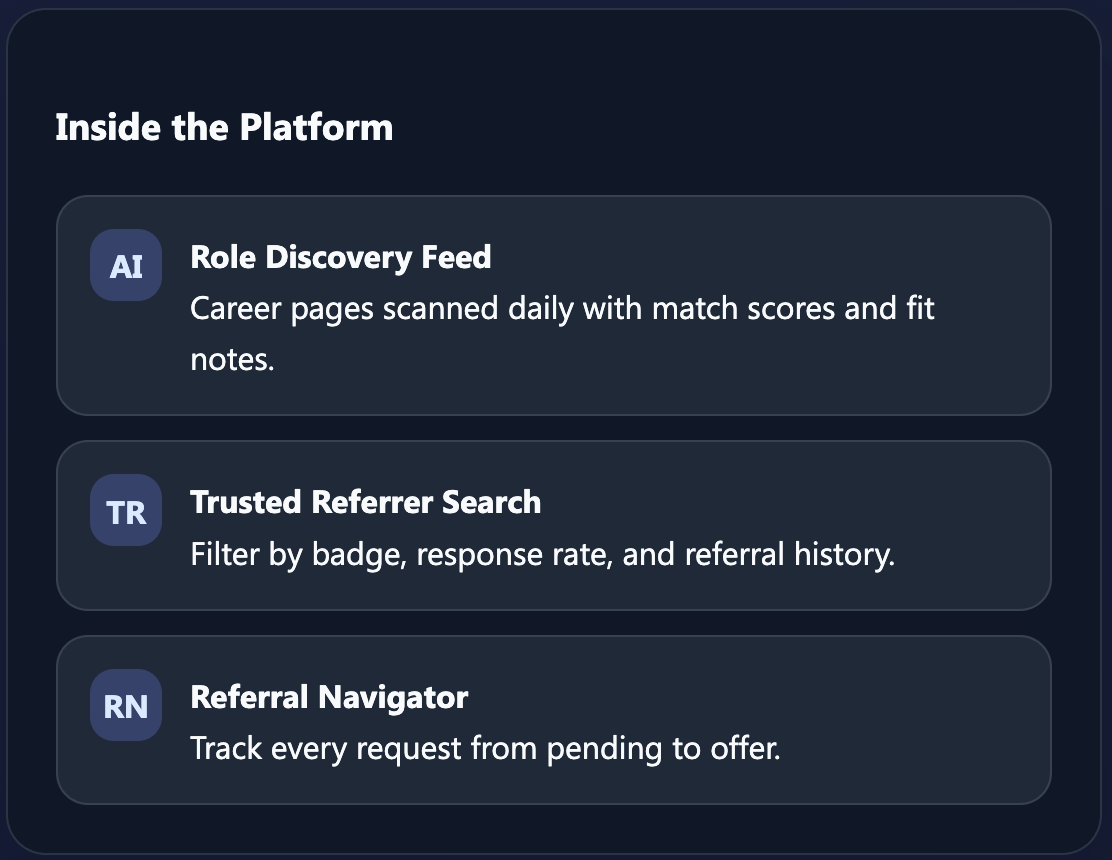
Built for candidates and referrers
Transparent, trust-based tools that respect privacy while delivering high-quality referrals.

The Job Seeker Struggle

The Cold Outreach For Referral
You spend hours crafting the perfect message, researching strangers on LinkedIn who might—just might—have a connection to your dream company. Each message sent is a tiny beacon of hope launched into the void.

2. The Endless Wait
Days turn into weeks. You refresh your inbox compulsively, watching that 'Message Sent' status like it holds the key to your future. The silence is deafening, and hope slowly fades with each passing hour.
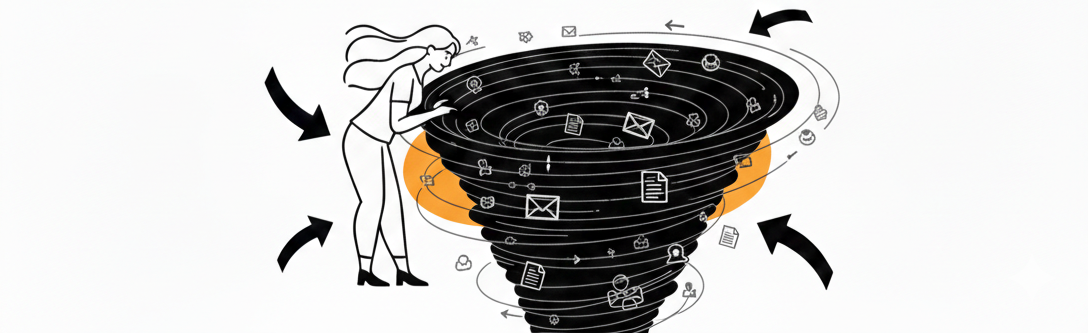
3. The Dark Abyss
Rejected. Ignored. Lost in a sea of applicants. The referral opportunities feel like mythical creatures—everyone talks about them, but finding one feels impossible. You're drowning in a black hole of uncertainty.
What I've Learned
Business strategy means thinking beyond features:
Building a two-sided marketplace forced me to think about retention, not just functionality. Referrals are episodic, you need one, then you're done until your next job search. The real challenge: how do you create daily engagement in a product people only need occasionally?
This insight shaped the Phase 2 strategy. The AI agent solves stickiness—if it runs daily and surfaces opportunities, people check the dashboard daily. The sequencing isn't just technical, it's business model.
Rapid prototyping ≠ shipping a real product:
Lovable got me to a working prototype in days. Building the actual deployed product took weeks. I learned when to prototype (test unclear assumptions) versus when to just build (requirements are clear, execution matters).
Both skills matter, but they're different disciplines.
User research reveals what people actually need:
Short interviews with job seekers and referrers shaped critical design decisions:
Job seekers told me:
"I feel weird asking strangers for help"—shaped the low-stakes transaction UX
"I lose track of where I applied"—validated combining marketplace + dashboard
"I just want someone to tell me the 3 roles to apply to today"—became the Phase 2 vision
Referrers told me:
They'll help strangers, but only with enough candidate info—shaped two-way visibility
They're worried about spam—influenced limiting simultaneous requests
The biggest learning:
Build, ship, learn, iterate beats plan, plan, plan. Actually putting something in front of users teaches you things interviews can't. Speed to learning matters more than speed to perfection.