AI Product · Solo Designer & Builder
Tiny Closet ,
AI Wardrobe for Kids
An AI-powered wardrobe assistant that transforms messy children's clothing collections into organized digital assets and daily styling inspiration for high-bandwidth parents.
The Problem
Kids outgrow clothes fast. Parents' mornings get harder.
Young children (ages 2–8) can go through 2–3 clothing sizes per year. Parents accumulate huge quantities of clothes, hand-me-downs, gifts, seasonal items, that become impossible to manage. The result: every morning is a scramble through disorganized drawers and closets, often ending with mismatched outfits and frustrated parents.
Pain point 1
Inventory chaos
Parents don't know what they own. Clothes get buried, forgotten, worn when too small, or missed entirely during laundry cycles.
Pain point 2
Morning decision fatigue
Choosing an outfit involves size checks, weather appropriateness, occasion suitability, and the child's preferences, too many variables before 8am.
The Solution
Photograph once. Let AI do the rest.
Parents photograph each clothing item once. AI categorizes it (type, size, color, season, occasion), stores it in a digital wardrobe, and generates daily outfit recommendations based on weather, occasion, and the child's style preferences.
AI Catalog
Instant classification
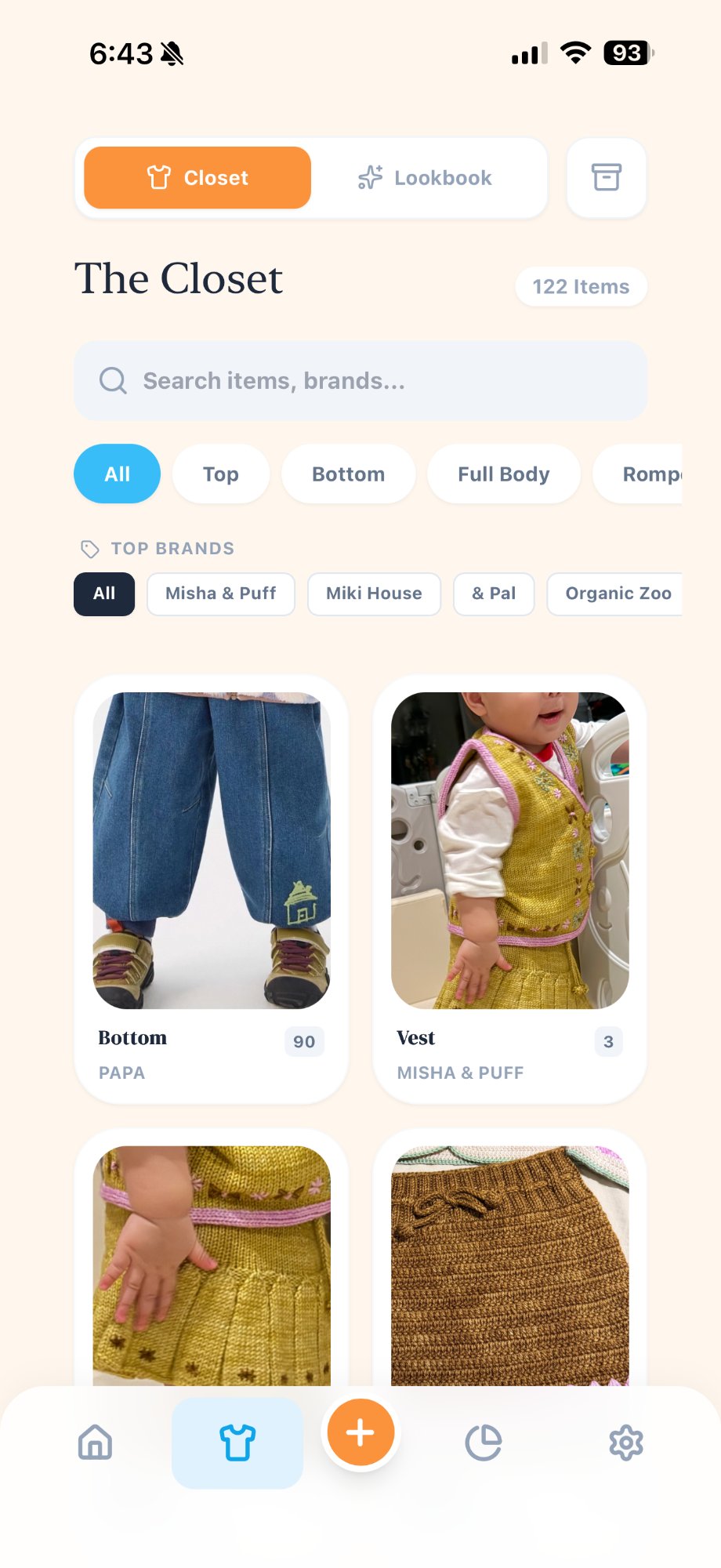
Take a photo and AI auto-tags: category, brand, color, season, size. 122 items organized in seconds. Filter by Top, Bottom, Full Body, Romper, Vest, and more.
Daily Outfits
Weather-aware suggestions
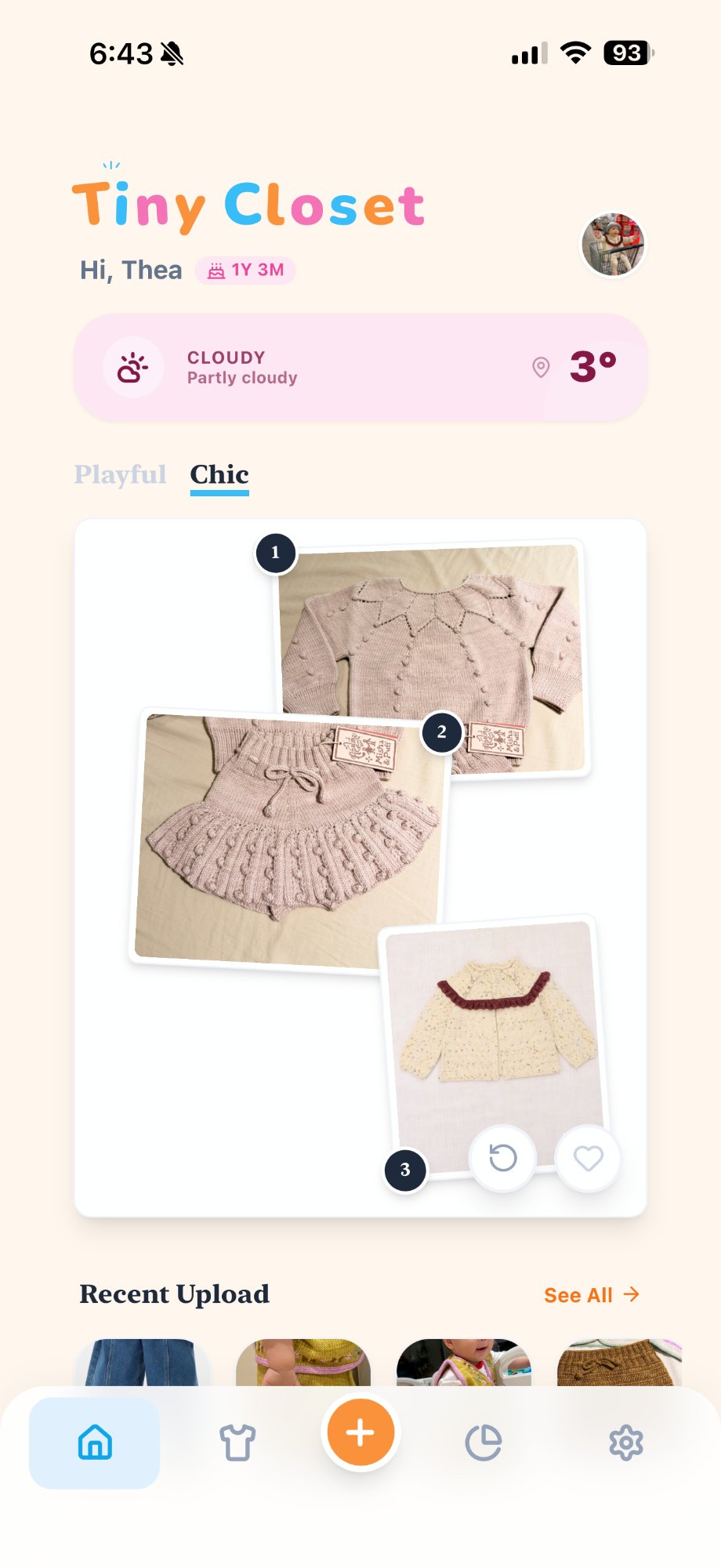
Home screen pulls live weather and surfaces outfit combos in Playful or Chic style. Numbered pieces let parents assemble quickly, no browsing required.
Closet Stats
Wardrobe intelligence
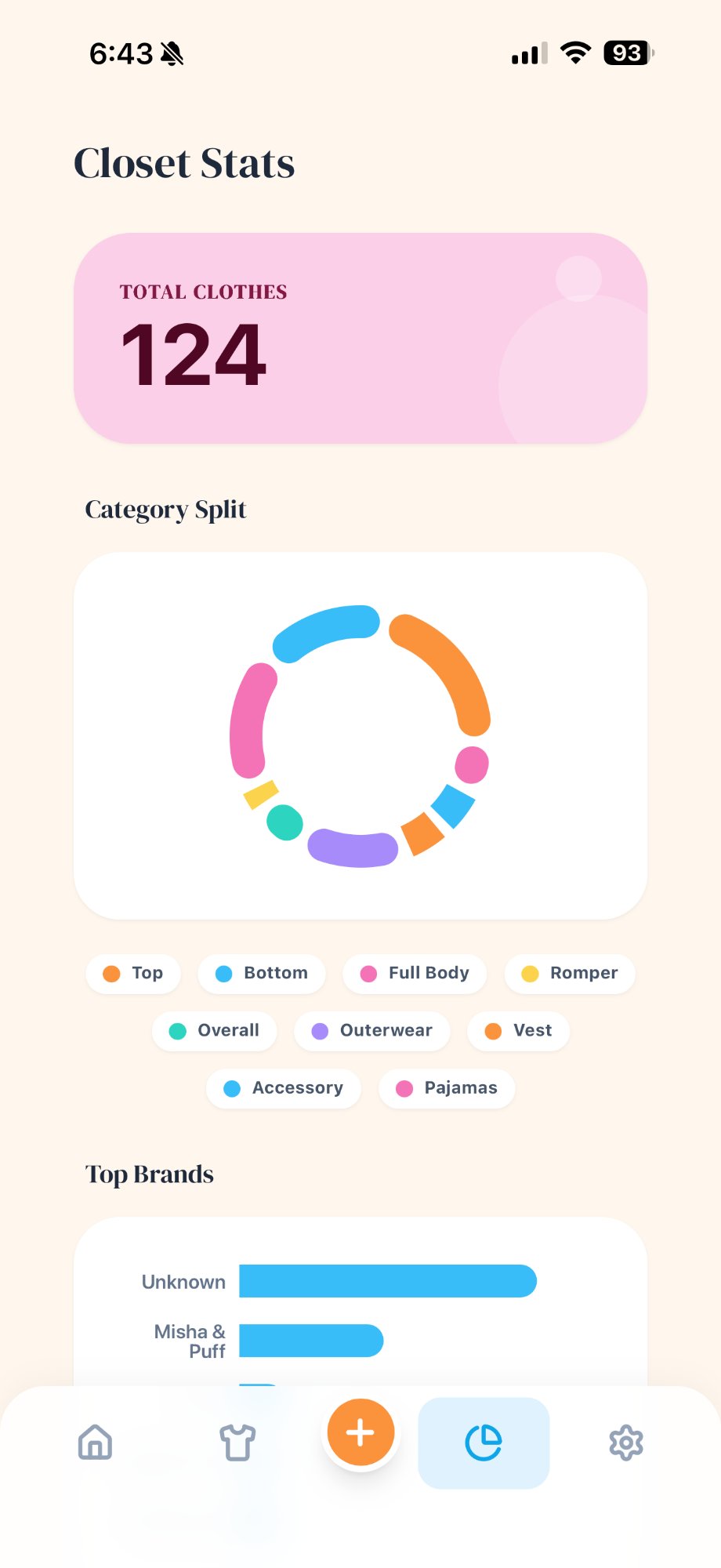
Visual breakdown of 124 items by category (Top, Bottom, Outerwear, Pajamas…) and top brands (Misha & Puff, Miki House). Know exactly what you own.
Key Design Decisions
Designing for exhausted parents at 7am
Local-first privacy
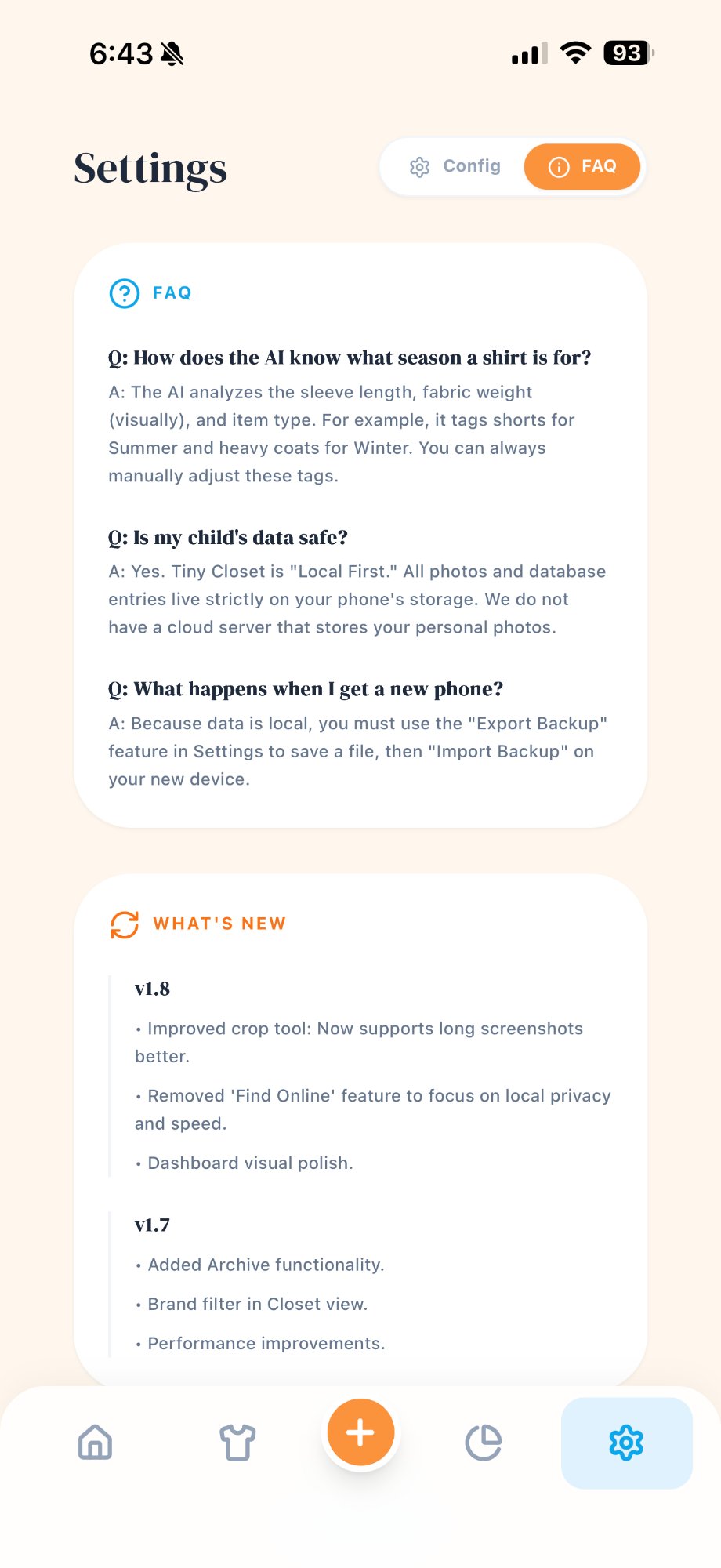
All photos and data live strictly on the phone's storage, no cloud server stores personal photos. This was a non-negotiable for parents sharing photos of their children. The FAQ answers this directly: "Tiny Closet is 'Local First.' We do not have a cloud server that stores your personal photos."
Style modes, not rigid rules
Two outfit modes, Playful and Chic, let parents quickly match the day's vibe without micro-managing every item. The AI adapts to the selected style when composing outfit sets.
Friction reduction
Numbered outfit pieces (1, 2, 3) make assembly obvious. Refresh button swaps combinations instantly. Heart saves favorites. Designed for one-handed use while holding a toddler.
Transparent AI
FAQ explains exactly how AI makes decisions: "The AI analyzes the sleeve length, fabric weight (visually), and item type. You can always manually adjust these tags." No black box.
What I Built
A working app with real users
Tiny Closet is a fully functional React Native app that my family uses daily for my daughter Thea (1Y 3M). The wardrobe has grown to 124 items across 9 categories. Features shipped across v1.7 and v1.8 include:
- Archive functionality, retire outgrown items without deleting them
- Brand filter in Closet view, quickly surface all Misha & Puff, Miki House, or Organic Zoo items
- Improved crop tool, handles long screenshots better for catalog photos
- Lookbook, saved outfit combinations for recurring occasions
- Export/import backup, preserves the local database when switching phones
"I removed the 'Find Online' feature to focus on local privacy and speed. Feature scope creep vs. core value, local-first won."
, v1.8 product decision
Learnings
What building for yourself teaches you
Lesson 1
Real usage reveals hidden friction
Daily use exposed issues no user interview would surface, like needing the crop tool to handle long screenshots after parents photograph clothes on hangers.
Lesson 2
Privacy as a feature, not a constraint
Local-first became a selling point, not a limitation. Parents with young children are more privacy-sensitive, making "no cloud" a trust builder, not a missing feature.
Lesson 3
Ship, then cut scope
Removing "Find Online" in v1.8 was the right call. Every feature that doesn't serve the core need adds cognitive overhead for both users and the builder.