
You've applied to 200 jobs. You've heard back from 3. The market is brutal, and the only thing that actually moves the needle is a referral from someone on the inside. ReferLink makes that possible at scale.
Designer-led, engineer-supported: I lead product vision, UX strategy, and all design decisions. Two backend engineers collaborate with me on infrastructure and data systems. This case study focuses on the product thinking and design rationale.
I experienced it firsthand, and so did everyone I talked to. You spend hours customizing resumes, writing cover letters, clicking "Easy Apply" hundreds of times. And you hear nothing back. The market is saturated, recruiters are overwhelmed, and your application is one of 500 in their inbox.
But when someone refers you? Your resume goes to the top of the pile. Referrals account for 30-50% of all hires, yet most job seekers don't have the right connections. The problem isn't effort. It's access.
The deeper insight: both sides want the same outcome. Job seekers need introductions. Employees want to earn referral bonuses. The friction isn't motivation, it's trust and access.
The second insight: even with a referral, job searching still eats hours every day. Checking boards, tailoring resumes, tracking applications. The manual work never stops. I saw two problems that needed solving, in the right order.
You can't automate referral discovery without first having a referral network. So I designed a two-phase approach: build the infrastructure first, then add intelligence on top.
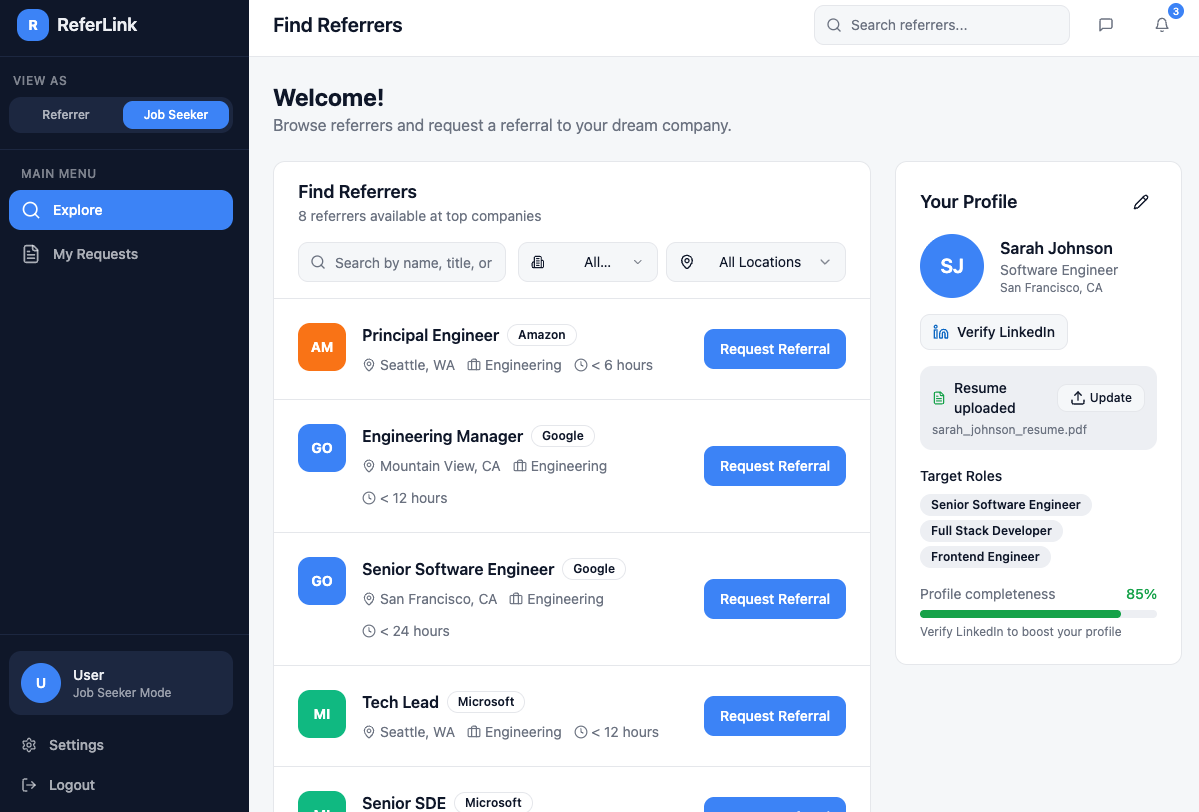
Explore referrers: Browse employees at top companies willing to refer, filterable by role, company, and location
One-click request: "Request Referral" removes the friction of cold outreach. No awkward LinkedIn DMs needed
Profile completeness: Seekers build trust through verified LinkedIn, uploaded resume, and target role clarity
Role switching: Users toggle between Referrer and Job Seeker modes, both sides of the marketplace in one account
You shouldn't need to spend months building relationships just to get your resume seen. Employees earn referral bonuses and want to help. Job seekers need introductions. The platform removes the awkwardness and matches them directly.
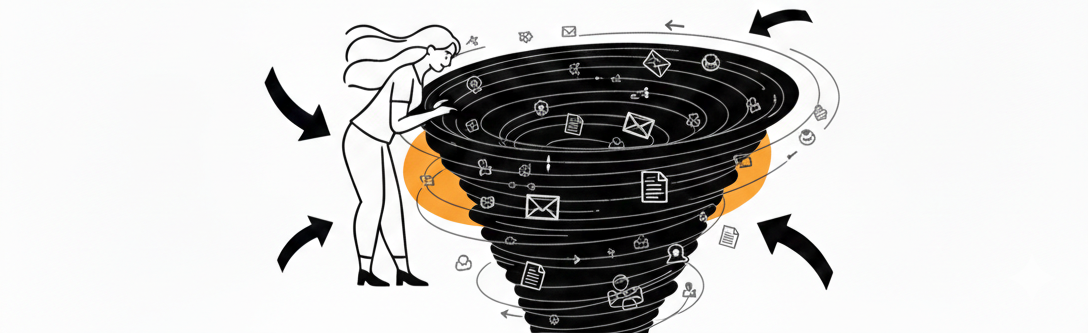
Even with referral access solved, the daily grind remains: scanning 50+ job boards, reading descriptions, tailoring resumes, tracking applications. That's hours of repetitive work every single day. The AI agent takes over.

A lesson I carried from my LivePerson work: AI recommendations only work if users understand them. Every match in ReferLink shows a clear explanation: which skills matched, which experience gaps exist, and why this role was surfaced. No black boxes.
Referrals are episodic: you need one, then you're done. A two-sided marketplace forced me to think about daily engagement, not just functionality. That insight shaped the entire Phase 2 strategy.
Lovable got me to a working prototype in days. Shipping the real product took weeks. I learned when to prototype (test unclear assumptions) versus when to just build (requirements are clear, execution matters).
Putting something in front of users teaches you things interviews can't. Build, ship, learn, iterate. The product got meaningfully better after every round of real feedback.